

Welcome to the
Malaysian Family Physician, a peer-reviewed open-access journal of family practice
and primary care research.
ORIGINAL ARTICLE

DIABETIC HYPERTENSIVE CONTROL AND TREATMENT: A DESCRIPTIVE REPORT FROM THE AUDIT DIABETES CONTROL AND MANAGEMENT (ADCM) REGISTRY
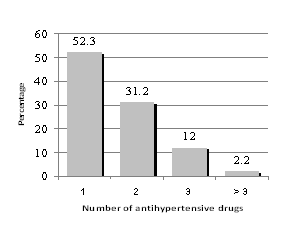
13 601 cases (65.9%) of the total sample were on antihypertensive drugs. 64.1% of those on antihypertensive drugs were prescribed angiotensin-converting enzyme inhibitors (ACEI) or angiotensin II receptor blockers; 35.3% were on β-blockers and 34.3% were on calcium channel blockers (Table 4). 14.2% of cases were on more than two anti-hypertensive drugs (Figure 1).
Table 4: Anti-hypertensives prescribed
Anti-hypertensive agent |
n (%) |
|---|---|
ACE inhibitor |
8456 (62.2) |
ARB |
254 (1.9) |
Centrally acting |
59 (0.4) |
Alpha-blockers |
976 (7.2) |
Calcium channel blocker |
4669 (34.3) |
Diuretic |
2473 (18.2) |
Beta-blocker |
4797 (35.3) |
Others |
57 (0.4) |
Total |
21 741 |
Figure 1: Percentage of number of anti-hypertensive prescribed
DISCUSSION
Majority of cases were from the public health clinics; the greatest number of cases came from the state of Negeri Sembilan. Predominance of female patients (57.2%) and retired elderly individuals in the registry (77.6% were > 50 years) reflects the day to day patient profiles of Malaysian public health care centres.27 However, the greater percentage of Indian as compared to Chinese patients recorded in the registry did not reflect the national ethnic representation. It was likely that this discrepancy was due to preference of Chinese patients seeking healthcare in the private sector31 or higher prevalence of DM among the Indians.
Similar to First Annual Report of National Eye database (2007) that stated 63.9% of diabetic patients were reported to have hypertension,32 the figure obtained in this study was 13 417 cases (65%). 19 484 cases (94.4%) had their BP readings recorded. It is a required routine for all diabetic patients to have their BP measured at the time of diagnosis and at each scheduled visit to the diabetic clinic.23 There could be accidental omission of BP readings for some cases in the registry.
13 601 cases (65.9%) were taking antihypertensive drugs, a figure slightly higher than the 65% of cases that were reported to have hypertension. It could be that antihypertensive drugs were prescribed solely for renoprotection and cardioprotection rather than for hypertension, or cases with controlled hypertension were considered as normotensive and not included in the report. 8070 cases (41.4%) or 39.1% if calculation were to be based on total number of 20 646 cases, achieved target BP of ≤130/80 mmHg (Table 3). This figure was comparable to those of Thailand cohort33 and slightly higher than the Swedish cohort (2003).34
Out of all cases on antihypertensive treatment in the ADCM registry, 52.3% were receiving monotherapy. Only 14.2% were receiving three or more antihypertensive drugs, a figure less than the 21.6% of Thailand cohort that received combined drug therapy.35 UKPDS 38 showed that diabetic patients with hypertension generally require three and more antihypertensive drugs after having the disease for more than nine years.15 ACEI that have been proven to confer significant renal and cardiac protection for high risk diabetic patients, were the most prescribed antihypertensive drugs.36,37 Previous study conducted in Melaka Tengah district in year 2003 indicated that the most commonly used antihypertensive was a beta blocker, metoprolol.38 This shows that there is greater awareness among healthcare providers of the usefulness of ACEI for diabetic patients. Angiotensin II receptor blocker is not widely prescribed because of its higher cost and prescribing is restricted only to medical specialists.
Phenomenon of therapeutic inertia (TI) was well-reported by Okonofua EC et al. in United States using the Hypertension Initiative database. It was found that TI could account for a 19% variance in BP control; patients who experienced higher TI score had systolic BP increased in their last visit when compared to first clinic visit and vice versa.39 Poor achievement of target BP of ≤130/80 mmHg in ADCM could be partly due to this phenomenon of TI in view of decreasing percentage of achievement of target BP corresponding to increasing age groups and increasing duration of diabetes. Other factors for failure to achieve target BP include budget constraints, degree of patient adherence to medication and limited number of qualified Family Medicine Specialists.
Limitation of this audit was the retrospective retrieval of data from patient records by physicians not involved in the clinical care of these diabetic cases. Information recorded may be inaccurate or incomplete. Hopefully with improved training and good teamwork, these unfavourable factors may be overcomed.
To improve the outcome of this national audit of such a massive scale, we recommend that:
- A steering committee to be established to look after timely reports and publications.
- A team of bio-medical statisticians to analyse database and to provide expert advice.
- Regular on-site training and support for SDP.
CONCLUSION
Hypertension is prevalent among patients with DM. Less than 50% of diabetic cases registered in the ADCM achieved good control of BP to the target level of ≤130/80 mmHg. Antihypertensive treatments were mainly monotherapy. Most commonly prescribed antihypertensive drug was ACEI. Prescribing skills of physicians for management of hypertension in patients with DM requires further improvements.
ACKNOWLEDGEMENT
We would like to acknowledge the Director General of Health for his support and approval in using these data from public health clinics for this study. We would like to express our thanks to Dr Jamaiyah Haniff of Clinical Research Centre (CRC), Hospital Kuala Lumpur, for facilitating access to the registry database and to CRC staff, Noor Akma Hassim and Tee Chin Kim. Special thanks to Ms Lena Yeap from ClinResearch Sdn Bhd for her support in the statistical analysis of data.
REFERENCES
- Epstein M, Sowers JR. Diabetes mellitus and hypertension. Hypertension. 1992;19(5):403-18. [PubMed] [Full text]
- Williams B. Insulin resistance; the shape of things to come. Lancet. 1994;344(8921):521-4. [PubMed]
- Williams G. Hypertension in diabetes. In: Pickup J, Williams G, editors. Textbook of diabetes. London: Blackwell Scientific Publications; 1991. p. 719-32.
- DeFronzo RA, Ferrannini E. Insulin resistance. A multifaceted syndrome responsible for NIDDM, obesity, hypertension, dyslipidemia, and atherosclerotic cardiovascular disease. Diabetes Care. 1991;14(3):173-94. [PubMed]
- Nishimura R, LaPorte RE, Dorman JS, et al. Mortality trends in type 1 diabetes. The Allegheny County (Pennsylvania) Registry 1965-1999. Diabetes Care. 2001;24(5):823-7. [PubMed] [Full text]
- Cowie CC, Harris MI. Physical and metabolic characteristics of patients with diabetes. In: Diabetes in America. National Diabetes Data Group. 2nd ed. Washington DC: U.S. Govt. Printing Office; 1995. p. 117-64.
- Mathiesen ER, Ronn B, Jensen T, et al. Relationship between blood pressure and urinary albumin excretion in development of microalbuminuria. Diabetes. 1990:39(2):245-9. [PubMed]
- 16th Report of the Malaysian Dialysis and Transplant Registry 2008. The National Renal Registry, Malaysian Society of Nephrology, Kuala Lumpur; 2009. [Full text]
- Agmon Y, Khandheria BK, Meissner I, et al. Independent association of high blood pressure and aortic atherosclerosis: a population-based study. Circulation. 2000;102(17):2087-93. [PubMed] [Full text]
- Stamler J, Vaccaro O, Neaton JD, et al. Diabetes, other risk factors, and 12-yr cardiovascular mortality for men screened in the Multiple Risk Factor Intervention Trial. Diabetes Care. 1993;16(2):434-44. [PubMed]
- Stratton IM, Kohner EM, Aldington SJ, et al. UKPDS 50: risk factors for incidence and progression of retinopathy in Type II diabetes over 6 years from diagnosis. Diabetologia. 2001;44(2):156-63. [PubMed]
- Garcia MJ, McNamara PM, Gordon T, et al. Morbidity and mortality in diabetics in the Framingham population. Sixteen year follow-up study. Diabetes. 1974;23(2):105-11. [PubMed]
- American Diabetes Association. Diabetes 2001 Vital Statistics. Alexandria VA: American Diabetes Association; 2001.
- Chobanian AV, Bakris GL, Black HR, et al. The Seventh Report of the Joint National Committee on Prevention, Detection, Evaluation, and Treatment of High Blood Pressure: the JNC 7 report. JAMA. 2003;289(19):2560-72. [PubMed]
- Tight blood pressure control and risk of macrovascular and microvascular complications in type 2 diabetes: UKPDS 38. UK Prospective Diabetes Study Group. BMJ. 1998;317(7160):703-13. [PubMed] [Full text]
- Hansson L, Zanchetti A, Carruthers SG, et al. Effects of intensive blood-pressure lowering and low-dose aspirin in patients with hypertension: principal results of the Hypertension Optimal Treatment (HOT) randomised trial. HOT Study Group. Lancet. 1998;351(9118):1755-62. [PubMed] [Full text]
- Hajjar I, Kotchen TA. Trends in prevalence, awareness, treatment, and control of hypertension in the United States, 1988-2000. JAMA. 2003;290(2):199-206. [PubMed] [Full text]
- Wolf-Maier K, Cooper RS, Kramer H, et al. Hypertension treatment and control in five European countries, Canada, and the United States. Hypertension. 2004;43(1):10-7. [PubMed] [Full text]
- Geiss LS, Rolka DB, Engelgau MM. Elevated blood pressure among U.S. adults with diabetes, 1988-1994. Am J Prev Med. 2002;22(1):42-8. [PubMed]
- Donnelly R, Molyneaux L, McGill M, et al. Detection and treatment of hypertension in patients with non-insulin-dependent diabetes mellitus: does the “rule of halves” apply to a diabetic population? Diabetes Res Clin Pract. 1997;37(1):35-40. [PubMed]
- Berlowitz DR, Ash AS, Hickey EC, et al. Hypertension management in patients with diabetes: the need for more aggressive therapy. Diabetes Care. 2003;26(2):355-9. [PubMed] [Full text]
- American Diabetes Association. Standard of medical care in diabetes - 2006. Diabetes Care. 2006;29(Suppl 1):S4-42. [PubMed] [Full text]
- Clinical Practice Guidelines: Management of Type 2 Diabetes Mellitus, 4th ed. Ministry of Health, Malaysia; 2009. [Full text]
- ADCM User Manual (version 1.0) [Online] [Full text]
- Diabetes Malaysia Registry. About DRM-ADCM. Clinical Research Centre, Kuala Lumpur. [Online] [Full text]
- Economic consequences of diabetes mellitus in the U.S. in 1997. American Diabetes Association. Diabetes Care.1998;21(2):296-309. [PubMed]
- National Health Morbidity Survey III. Ministry of Health, Malaysia; 2006.
- Noor Ghani S, Yadav H. Health Care in Malaysia. University of Malaya Press. Kuala Lumpur; 2008.
- Mastura I, Zanariah H, Fatanah I, et al. An Audit of Diabetes Control and Management (ADCM). Med J Malaysia. 2008;63(suppl C):76-7. [PubMed]
- Clinical Practice Guidelines: Management of Hypertension, 3rd ed. Ministry of Health, Malaysia; 2008. [Full text]
- Toh MP, Heng BH, Sum CF, et al. Measuring the quality of care of diabetic patients at the specialist outpatient clinics in public hospitals in Singapore. Ann Acad Med Singapore. 2007;36(12):980-6. [PubMed] [Full text]
- Goh PP, Elias H, Mariam I, et al. The First Annual Report of the National Eye Database 2007. [Online] [Full text]
- Kosachunhanun N, Benjasuratwong Y, Mongkolsomlit S, et al. Thailand diabetes registry project: glycemic control in Thai type 2 diabetes and its relation to hypoglycemic agent usage. J Med Assoc Thai. 2006;89(Suppl 1):S66-71. [PubMed]
- Eliasson B, Cederholm J, Nilsson P, et al. The gap between guidelines and reality: Type 2 diabetes in a National Diabetes Register 1996-2003. Diabet Med. 2005;22(10):1420-6. [PubMed]
- Bunnag P, Plengvidhya N, Deerochanawong C, et al. Thailand diabetes registry project: prevalence of hypertension, treatment and control of blood pressure in hypertensive adults with type 2 diabetes. J Med Assoc Thai. 2006;89(Suppl 1):S72-7. [PubMed]
- Effects of ramipril on cardiovascular and microvascular outcomes in people with diabetes mellitus: results of the HOPE study and MICRO-HOPE substudy. Heart Outcomes Prevention Evaluation Study Investigators. Lancet. 2000;355(9200):253-9. [PubMed]
- Yusuf S, Sleight P, Pogue J, et al. Effects of an angiotensin-converting-enzyme inhibitor, ramipril, on cardiovascular events in high-risk patients. The Heart Outcomes Prevention Evaluation Study Investigators. N Engl J Med. 2000;342:145-53. [PubMed] [Full text]
- Chan GC. Type 2 diabetes mellitus with hypertension at primary healthcare level in Malaysia: are they managed according to guidelines? Singapore Med J. 2005;46(3):127-31. [PubMed] [Full text]
- Okonofua EC, Simpson KN, Jesri A, et al. Therapeutic inertia is an impediment to achieving the healthy people 2010 blood pressure control goals. Hypertension. 2006;47(3):345-51. [PubMed] [Full text]